Now Offering Exotic Vehicle MD State Safety Inspections & Pre-Purchase Inspections
Review Us

- Home
- About
- Services
- Exotic Vehicles
- Ferrari
- Ferrari Master Technicians
- Ferrari Mechanic
- Ferrari Repair
- Ferrari Oil Change
- Ferrari Collection
- Ferrari Enzo Collection
- Ferrari California Collection
- Ferrari Testarossa Collection
- Ferrari Mondial Collection
- Ferrari 308 Collection
- Ferrari 348 Collection
- Ferrari 355 Collection
- Ferrari 360 Collection
- Ferrari 430 Collection
- Ferrari 456 Collection
- Ferrari 488 Collection
- Ferrari 550 Collection
- Lamborghini
- Lamborghini Service Center
- Lamborghini Maintenance
- Lamborghini Repair
- Lamborghini Oil Change
- Lamborghini Collection
- Lamborghini Aventador Collection
- Lamborghini Diablo Collection
- Lamborghini Gallardo Collection
- Lamborghini Huracan Collection
- Lamborghini Murcielago Collection
- Lamborghini Urus Collection
- Maserati
- Aston Martin
- Bentley
- Porsche
- Rolls-Royce
- Lotus
- Ferrari
- Resources
- Service Areas
- Gallery
- Contact

BOOK ONLINE OR
CALL 410-638-AUTO
Spring 2026 Winner of the Engineering Excellence Scholarship
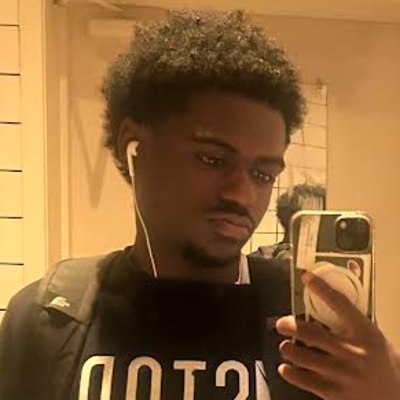
Nico Brown
Nico is an inquisitive high school senior, dedicated to his school work and academic future. In his essay, Nico explores the severity of concussions in contact sports, specifically lacrosse, and the impact of helmet fit. The essay reflects Nico’s academic passions, but also his desire to protect young athletes from concussion risks going forward.
Read Their Essay Here:
Concussions are still one of the biggest unsolved problems in contact sports today. Despite recent improvements in helmets and safety rules, athletes, especially goalies in lacrosse, suffer from the irreversible brain damage caused by concussions. One major issue is that helmet safety often focuses more on materials and ratings than on how a helmet actually fits and moves on an athlete's head during impact. I believe engineering can help close this gap. Instead of just talking about the problem, I've taken steps to try and solve it myself.
To me, engineering is a process that involves working with others, learning from mistakes, and improving over time. Throughout my experience in the Science and Technology program at my high school, I've practiced this process through hands-on projects. I built a cardboard gingerbread house decorated with LED lights powered by a paper wind turbine blade and small solar panels. I helped design a bridge made from uncooked spaghetti and hot glue that held over thirty pounds before it eventually snapped. One of my personal favorites was a Microbit I coded to play rock, paper, scissors using blocks of code. These projects showed me that failure isn't a bad thing; it's often how better designs are made.
For my Senior Research Practicum, I decided to apply this way of thinking to a
real-world problem: how helmet fit affects concussive impacts for lacrosse goalies. I chose this topic because concussions are common in sports, yet many factors behind them are still not fully understood. Reading articles written by medical doctors and published from the NIH and other research databases helped me understand kinematic variables that occur in concussions, such as linear acceleration and rotational velocity.
To record these variables, I found a Bluetooth accelerometer that could record acceleration during impacts. However, collecting accurate data meant I needed a realistic testing setup. Since none ofmy friends wanted to volunteer as test subjects, I built my own system called the Goalie Impact Response Test. At first, I planned to place the accelerometer on the back of the helmet, but I quickly realized this would only measure helmet movement and not the movement of the skull. To fix this, I carved a small pocket into the frontal lobe area of a foam mannequin head I bought from a beauty supply store so the accelerometer would move more like a real skull during impact.
Another challenge was simulating neck movement. A head that doesn't move wouldn't properly represent a real goalie in game situations. I struggled with this problem for a while until I was brainstorming in class with a friend. As he slowly moved his fist towards me to imitate a punch, I had an idea: boxing! I replaced the inflatable bag on my brother's reflex boxing stand with the foam mannequin head, allowing it to rotate and recoil in a way that better mimics cervical motion.
Once the system was built, I tested different helmet fit conditions using my Cascade XRS lacrosse helmet. By adjusting the chinstrap and back panel, I created three fit levels: loose, which allowed excessive shifting and poor security; ideal, with slight shifting while still feeling comfortable; and tight, with very little movement but firm pressure. By comparing acceleration data across these conditions, I aim to better understand how improper helmet fit could increase concussion risk, even when a helmet meets current safety standards.
As a lacrosse player, this project has held deep personal value to me. Through engineering, I want to help solve other issues that address real problems and help protect people. Concussion research requires teamwork between engineers, doctors, and athletes. Although I'm still in high school, I built my own model, studied the research of specialized doctors to inform my approach, and empathized with vulnerable athletes, like myself, who may suffer from concussions. By questioning existing designs and building my own solutions, I've learned that engineering isn't just about building things; it's about making meaningful improvements to people's lives.



LOCATION7 Newport Drive, Suite A  VIEW MAP VIEW MAP
|
BOOK ONLINE OR
|

